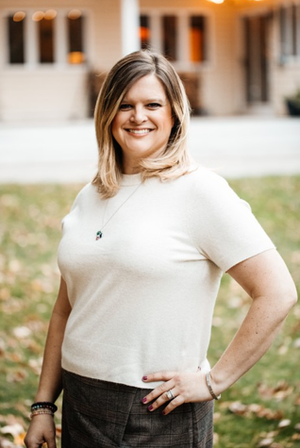
| | Hello, Friends!September has brought a new school year, some new routines for our family, and quite a few projects that I’m excited to share with you. Between writing, graduate school, supporting families, and preparing for NAGC2026, I’ve been spending a lot of time thinking about how the ideas behind InterestEd translate into everyday learning experiences for students as well as educators.
One question keeps coming up for me: What can an educator take from my work and actually use tomorrow? That question has been guiding my recent work, from the articles I’m writing to the framework I’m developing for my capstone.
I hope you find something here that’s useful, gives you a new way to think about a familiar situation, or helps you feel a little more connected to others doing this work.
Laura |
|
|
|
|
|
|
|
|
|
|
|
|
|
A glimpse into life this season |
|
| We’re settling into the school year at our house, although I’m still figuring out exactly what “settled” looks like with three children heading in different directions! Amita is back to school and ballet, Aryana has started swim team and is enjoying having something new of her own, and Ashima recently began taking music theory and aural musicianship courses for college credit at UW–Stevens Point alongside her junior high classes.
I’ve been working on campus while she’s in class, so my office looks a little different in the mornings. It has been exciting to watch her begin this experience, and I’m grateful to the people who have helped make it possible.
It has also given me a lot to think about as both a parent and an educator. Behind a learning opportunity, there are often conversations, schedule adjustments, transportation arrangements, and decisions that other people never see. That connection between family life and educational opportunity has become the starting point for some of my newest writing.
|
|
|
| |
|
|
|
|
|
|
|
|
| |
|
|
|
|
| |
My capstone project for my master’s program at UW–Madison is beginning to take a clearer shape. I’m developing the Whole Learner Instructional Decision Framework, which will draw on educational psychology to help educators examine instruction they already use and identify manageable, purposeful adjustments.
I keep picturing a teacher looking at tomorrow’s lesson and asking: What am I asking students to think about? Where might they need more support or greater challenge? What could I adjust to make this a more meaningful learning experience?
Those are the kinds of decisions I want the framework to support. It’s still being developed, and the research will help shape it, but the practical purpose is becoming much clearer. Gifted education has strongly influenced my thinking, while the framework itself is intended to support instruction for a wide range of learners.
Another recent milestone: the PAGE book project I helped bring through publication is now available in paperback and Kindle formats! It has been rewarding to help move someone else’s work through that process and see it become available to readers.
View the PAGE Book on Amazon
|
|
|
|
|
|
|
|
|
|
|
|
| | Coming soon: What an “A” Doesn’t Tell Us
I’ve been working with my Edutopia editor on a new article about the relationship between success and learning, particularly for students who can meet classroom expectations without much difficulty. It explores what teachers can do after students demonstrate mastery by changing the depth, complexity, context, or autonomy within a learning experience.
I’m looking forward to sharing it soon. In the meantime, you can read my summer Edutopia piece below.
Read “Setting Up Constraints to Inspire Creative Thinking”
|
|
|
|
|
|
|
|
|
|
|
|
| | | Help us put Wisconsin students and schools in the spotlight!
NAGC is coming to Milwaukee November 5–8, and I’m helping WATG organize a Wisconsin Local Spotlight celebrating the work happening in schools and communities across our state.
We especially need district spotlights and student artwork, with submissions due October 5. We are also looking for student musicians, dancers, actors, and other performers.
Know a school, art teacher, gifted coordinator, or student who should be included? Reply to this email and I’ll send you the appropriate flyer and submission information. |
|
|
|
|
|
|
|
|
|
|
|
|
| The beginning of the year brings plenty of opportunities to learn students’ names and interests. The next question is what we do with that information once instruction is underway.
My What You Should Know About Me student profile invites learners to share their strengths, challenges, interests, and experiences. Their responses can become useful starting points for decisions about grouping, examples, support, and opportunities for choice.
Explore the Student Profile Template |
|
|
| |
|
|
|
|
|
|
|
|
|
| A small practice to try: Teach, Prompt, or Wait
One idea from my recent writing is to pause briefly when a student asks for help and consider what kind of support would be useful. Teach: Is the student missing knowledge or a skill needed to continue? Prompt: Could a question, example, or reminder help the student identify a next step? Wait: Is the student making sense of the task and likely to benefit from a little more thinking time?
This is a reflection prompt you can try during a lesson. It isn’t a required sequence, and students should receive help when they need it. Its purpose is to help us notice whether our response gives the learner what they need while preserving an opportunity to think.
You might try it for a few days and pay attention to what happens when you ask, “Where did this stop making sense?” before demonstrating the next step.
Free Social/Emotional Development PosterI’m also sharing my free Artistically Gifted Students: Emotional & Social Development Chart as school arts programs and lessons get underway. It offers a reference for considering the social, emotional, and creative experiences of artistically gifted learners, with ideas for supporting confidence and balance. It can be a useful starting point for conversations among families, classroom teachers, and arts educators.
Download the Free Poster
|
|
|
|
|
|
|
|
|
|
|
|
|
|
“How do I make a lesson more meaningful when I don’t have time to redesign it?” |
|
| Choose one part of the lesson and examine the thinking it requires.
If students are reading a textbook section and answering questions, for example, consider replacing one recall question with a question that asks them to make and defend a judgment. In social studies, that might mean deciding which factor contributed most to an event and explaining their reasoning with evidence from the reading.
You still have the same text, learning goal, and class period, but you’ve created an opportunity to see how students connect and use the information. Their responses can then help you decide whether to clarify a concept, provide support, or extend the discussion.
Keep the adjustment small enough that you can notice its effect. Afterward, ask yourself what students’ responses revealed and what you would keep or change next time.
What classroom question would be helpful to work through in a future newsletter? Reply and let me know. |
|
|
|
|
|
|
|
|
|
|
|
|
|
Support for the Year AheadThrough InterestEd, I work with schools, educators, and families who want to make learning more meaningful, responsive, and appropriately challenging. I offer virtual professional learning, instructional coaching, curriculum support, and gifted education consultation.
Often, we can start with something you already have: a lesson or unit, a recurring classroom challenge, or a question about a learner’s needs, and figure out what purposeful adjustments are worth trying.
Interested in working together? I’d love to hear what you’re thinking about.
Going to NAGC in Milwaukee? I’ll be presenting “Challenge, Autonomy, and Identity: Why Curriculum Decisions Shape Gifted Learners’ Futures” on Saturday, November 7, from 9:15–10:00 a.m. I’d love to connect while you’re there.
|
|
| | |
|
|
|
|
|
|
|
|
|
| |
|
|
|
|
|




The school year is underway, and there’s a lot happening at InterestEd. This September issue includes practical classroom ideas, updates on the Whole Learner Instructional Decision Framework, gifted education and professional learning news, recent writing, resources, and a look at what I’ve been working on this fall.