
Selected to Present at NAGC26: Why Curriculum Decisions Shape Gifted Learners’ Futures
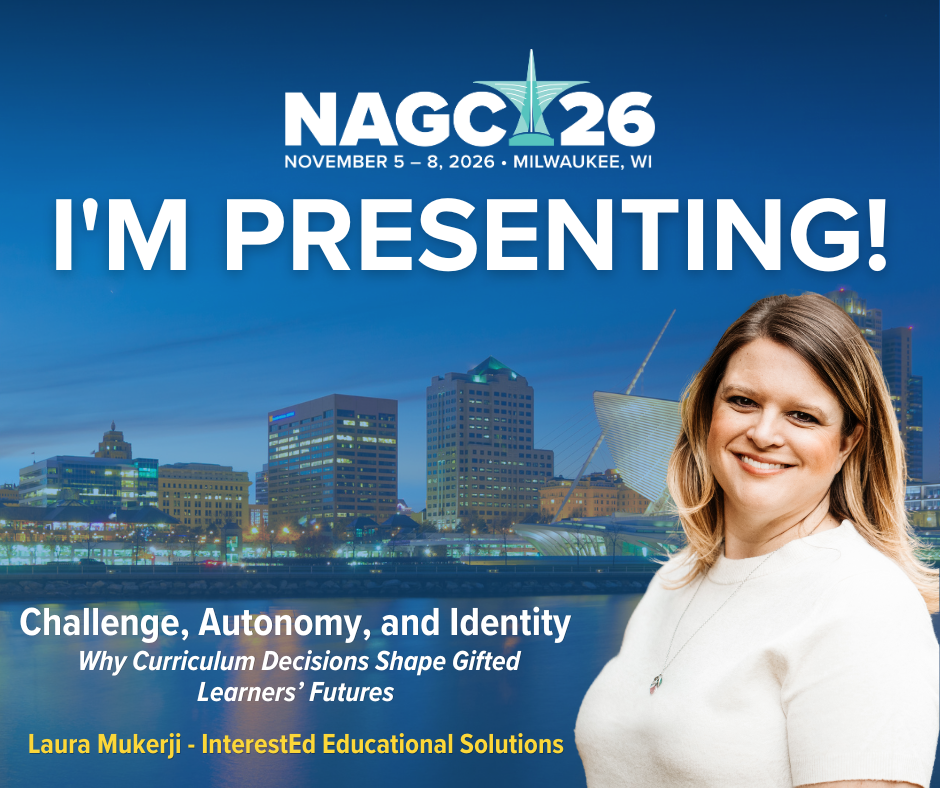
I’m honored to share that I’ve been selected to present at NAGC26, the National Association for Gifted Children Annual Convention, taking place this November in Milwaukee!
My session, Challenge, Autonomy, and Identity: Why Curriculum Decisions Shape Gifted Learners’ Futures, was accepted among more than 800 submitted proposals. I’m grateful for the opportunity to contribute to a national conversation alongside educators, researchers, and leaders committed to supporting advanced learners.
Why This Topic Matters
When people think about gifted education, conversations often focus on identification, acceleration, or enrichment. While those topics matter, another question deserves equal attention: What kind of learning environments are we creating once students are identified?
Curriculum decisions are often treated as logistical choices. Pacing guides, grouping models, access to advanced content, depth of study, flexibility, and autonomy can seem like scheduling matters. But, they are much more than that. These decisions shape how gifted learners experience school, how they see themselves, and whether they remain engaged over time.
Curriculum Shapes Identity
Gifted learners do not only need harder work or more work.
“What kind of learning environments are we creating once students are identified as Gifted?”
They need:
Meaningful challenge
Intellectual depth
Opportunities for autonomy
Space for curiosity
Environments where effort and growth are valued
When those elements are missing, students may underperform, disengage, mask their abilities, or internalize inaccurate beliefs about themselves. When those elements are present, students are more likely to develop confidence, resilience, motivation, and a healthy sense of identity.
Long-Term Growth Matters
My work has always centered on a larger goal: helping gifted learners grow into capable, grounded, fulfilled adults who understand their strengths and know how to contribute meaningfully. Gifted education is not just about higher test scores or advanced coursework. It is about talent development, emotional well-being, self-understanding, and long-term thriving.
That is why curriculum matters so deeply.
What I’ll Be Sharing at NAGC26
In this session, I’ll explore:
How challenge influences motivation and persistence
Why autonomy matters for gifted learners
The hidden cost of underchallenge
How curriculum design shapes identity over time
Practical frameworks leaders can use when making program decisions
My hope is that attendees leave with language and tools to evaluate gifted programming through a developmental lens, not just an operational one.
Looking Ahead
I’m deeply grateful for the opportunity to present at a national conference and to continue advocating for students, families, educators, and schools. If you’ll be attending NAGC26, I’d love to connect in Milwaukee. Because when we design better learning experiences, we do more than improve school outcomes.
We help shape futures.
🌿 Laura




The school year is underway, and there’s a lot happening at InterestEd. This September issue includes practical classroom ideas, updates on the Whole Learner Instructional Decision Framework, gifted education and professional learning news, recent writing, resources, and a look at what I’ve been working on this fall.